What Hit My Linux Honeypot in 7 Days? 108K Attack Sessions Analyzed
"From credential spraying and BusyBox probes to a coordinated, multi-architecture cryptomining deployment."
My field report based on raw authentication, command, session, and payload telemetry.

Shape of the week
Daily session counts on the left, hourly distribution on the right (UTC). In conclusion, Automated bots do not sleep, but campaigns still have a rhythm.

Credential attempts
I intentionally put a mask on passwords. Bots replay credentials harvested elsewhere. Some of these may be real leaked passwords.
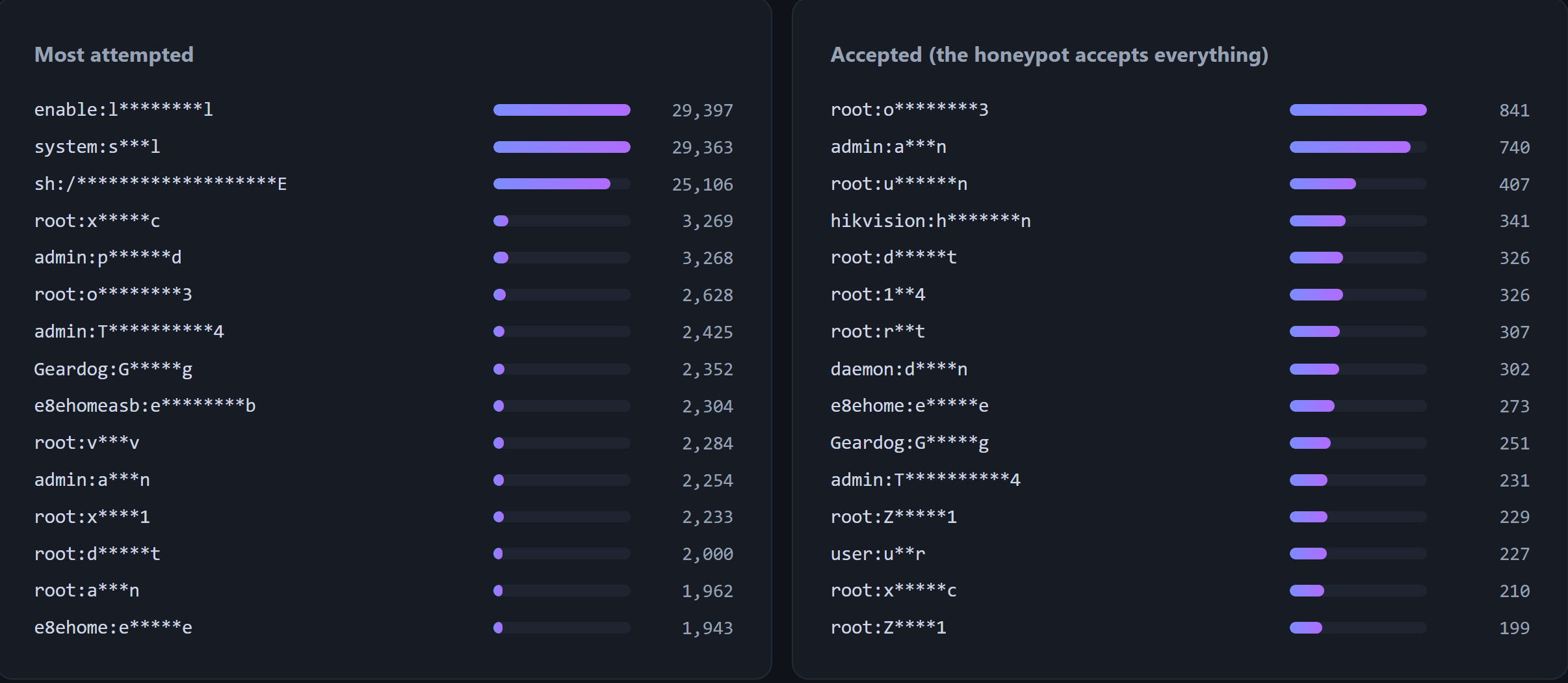
Mirai overlap: I identified 46 of the attempted pairs match credentials from the leaked Mirai source code's 60 defaults. These pairs account for 22.2% of all login attempts (39,496 tries). Most of the traffic is not a new attack and it's copies of a decade-old codebase still circulating, each one probing for a specific camera or DVR firmware's factory password.
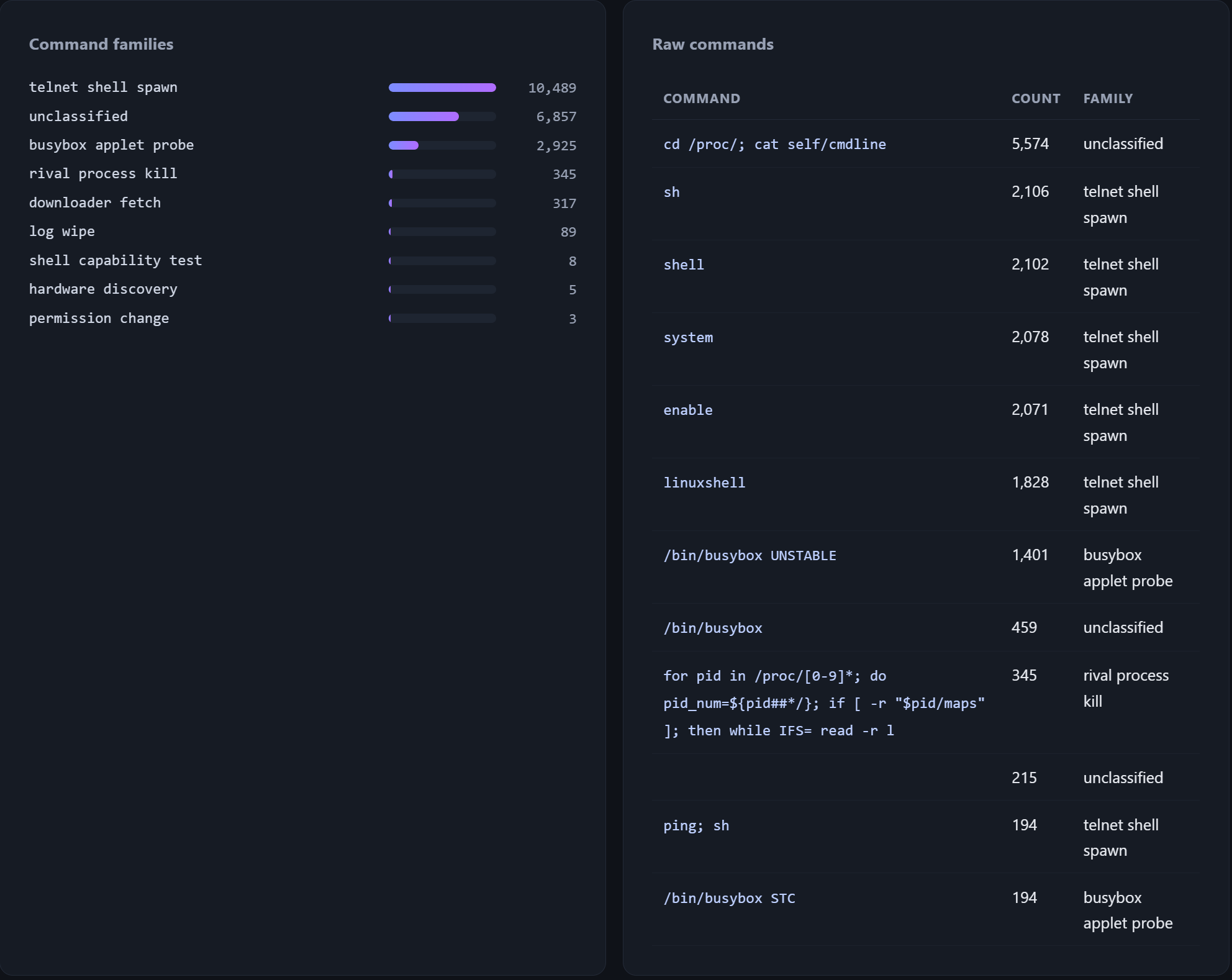
Commands run inside my honeypot
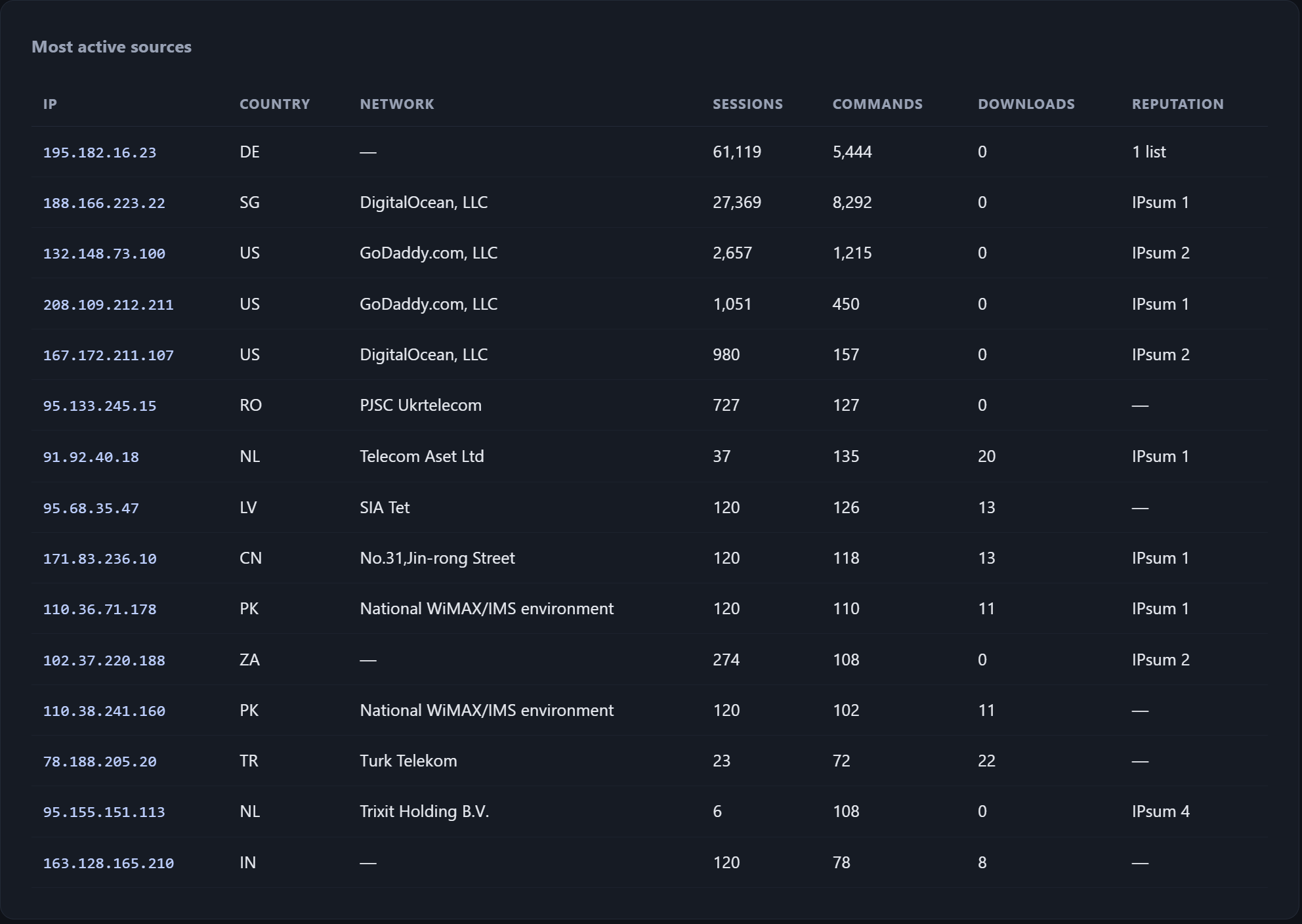
260 IPs reached a shell (19.9% of all sources). The rest tried credentials and left.
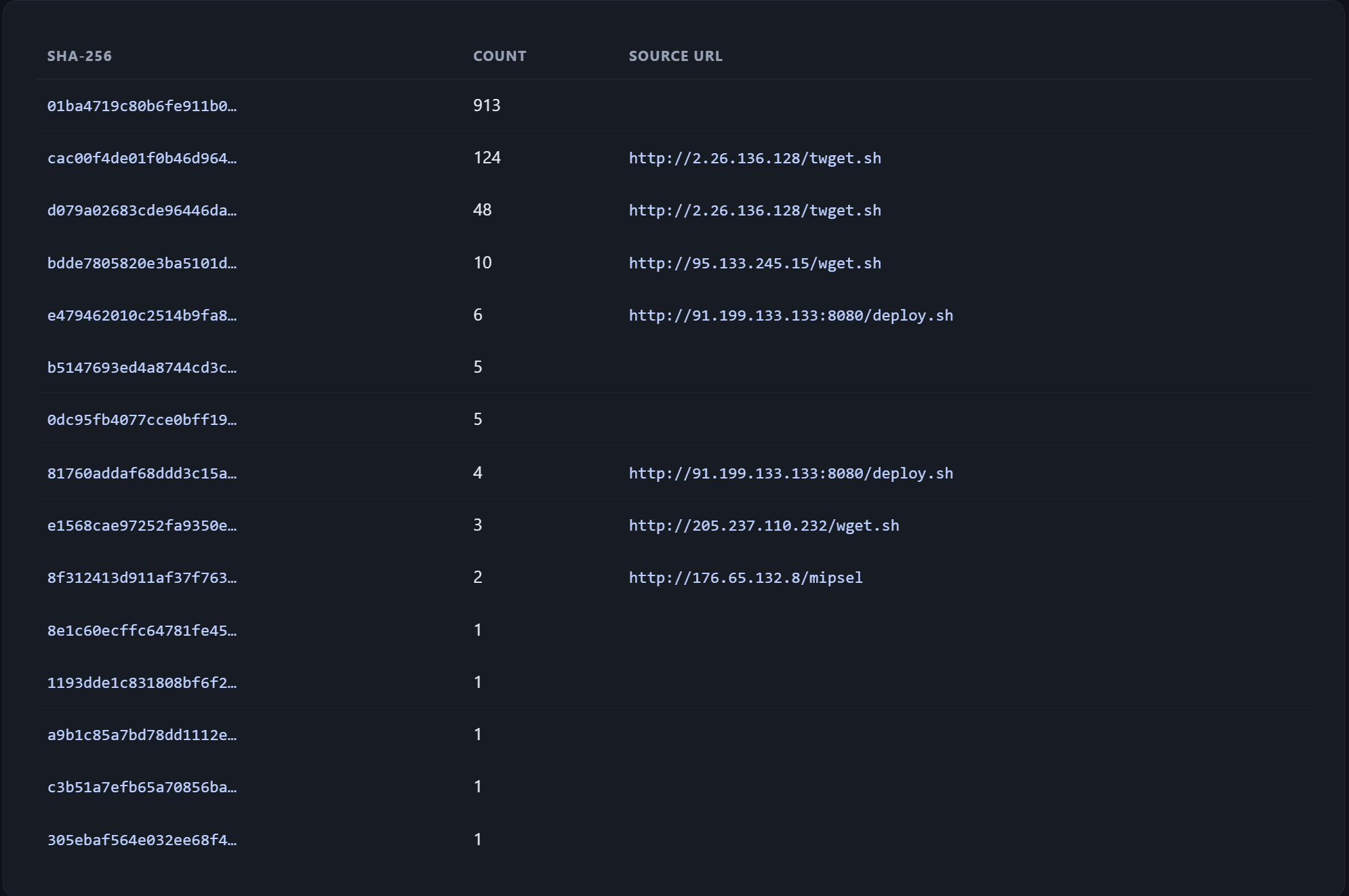
Payloads downloaded
The honeypot stores files but never executes them (even attacker attempts, simply it is in honeypot).
I identified:
- 15 unique files
- 1,125 download attempts.
Who were connecting
Based on retrieved data, geography and network owner from a local MaxMind database; reputation tags from public lists observed. None of this triggers any action. They were simply context ,so nothing more.
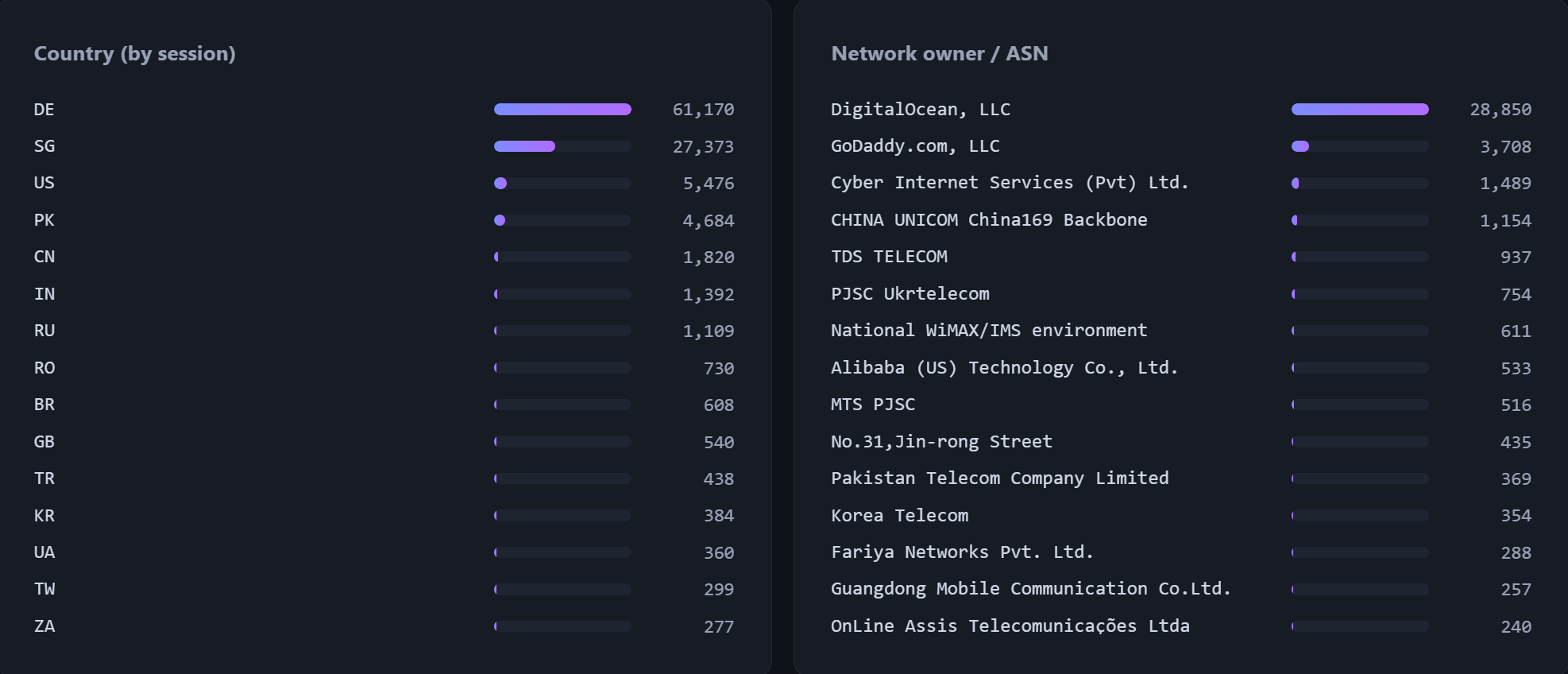
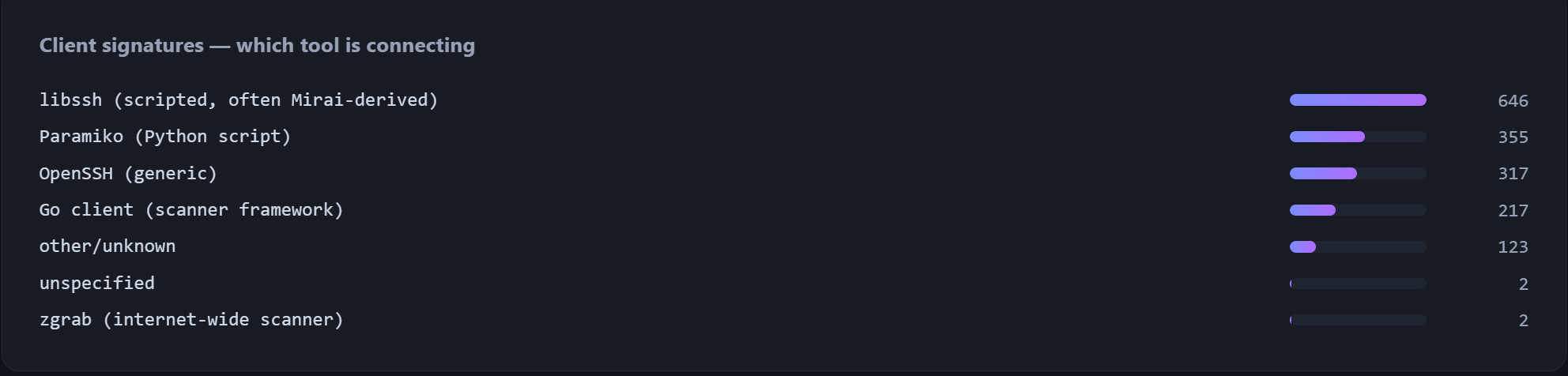
642 sources (49%) already appear on at least one public blocklist. It does not mean they should be blocked a listing is information, not a verdict.
MITRE ATT&CK coverage
Every technique derives from a concrete command or login attempt recorded in my honeypot. We can categorize them as
Rule-based and deterministic: if there is no evidence, the technique is not listed. In my case, most of the trials were false positive ,but I tried to add most identical & real ones.
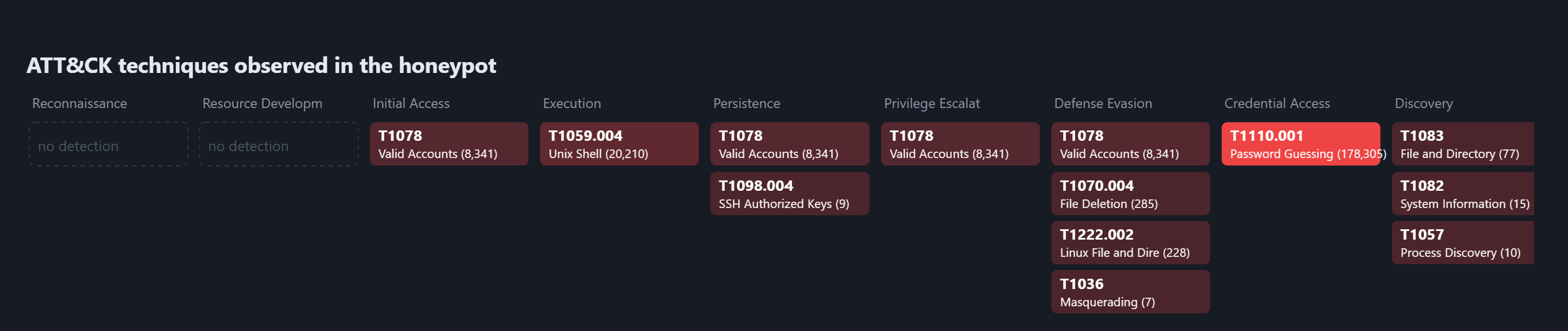
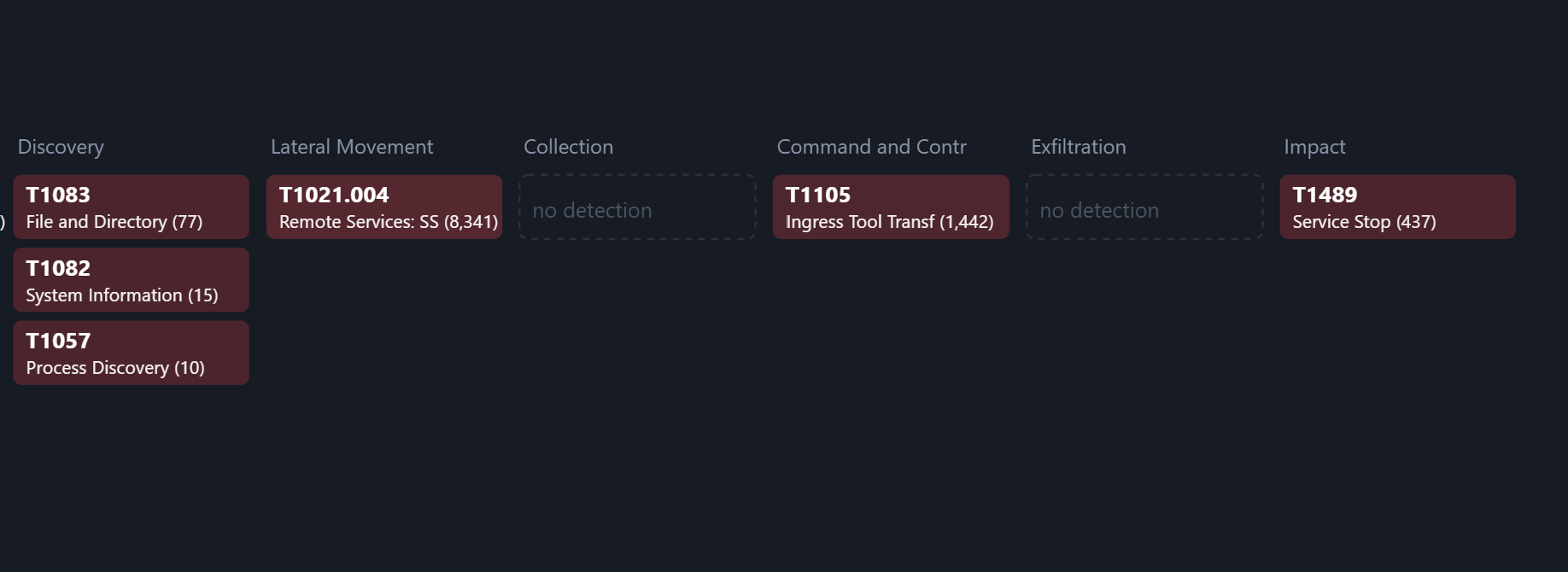
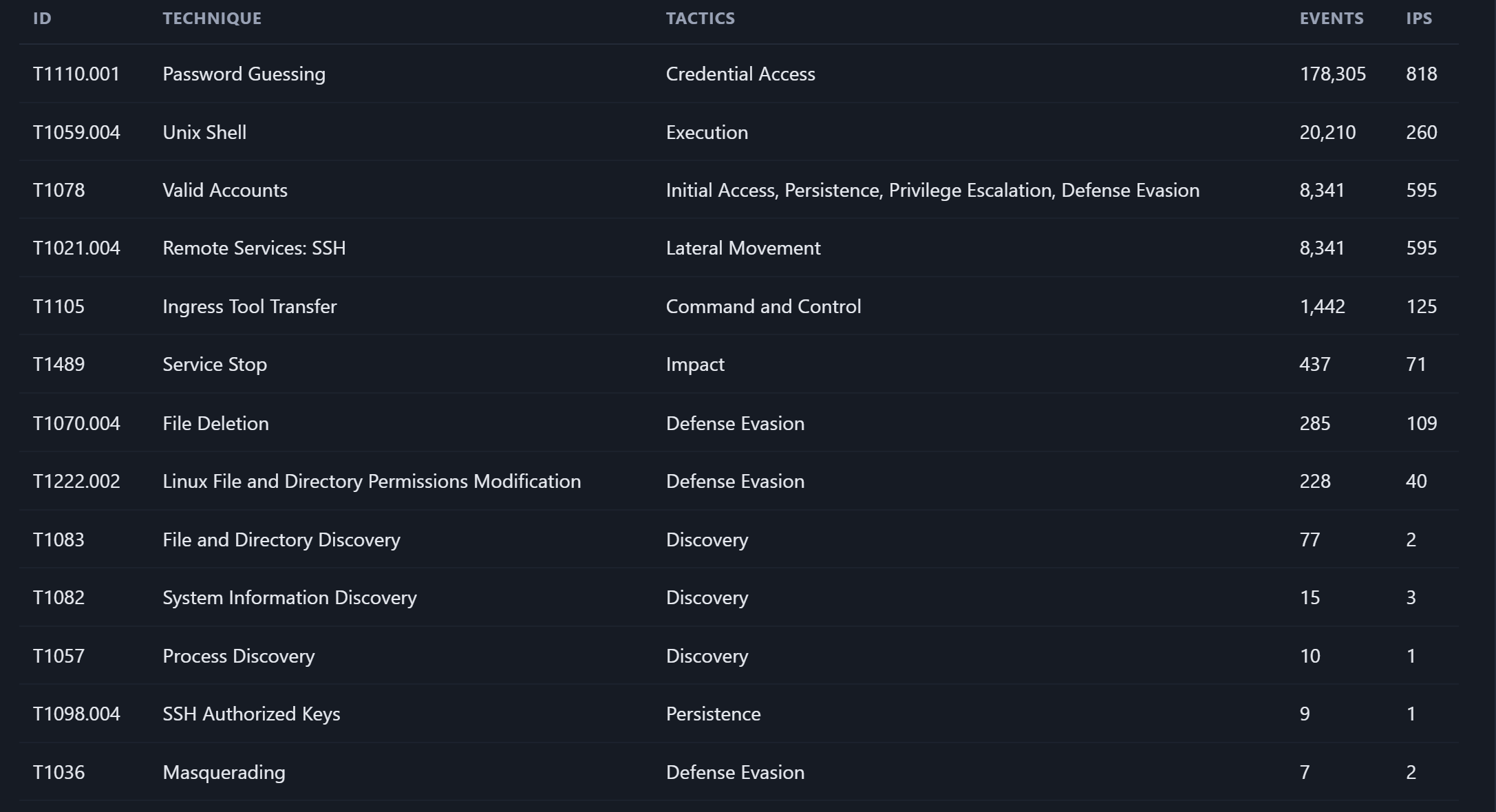
Unobserved tactics (4)
- Reconnaissance,
- Resource Development,
- Collection,
- Exfiltration.
It was not a detection gap because my honeypot holds nothing worth stealing, so collection and exfiltration never begin. Reconnaissance and resource development happen on the attacker's side, without touching me. From my point of view, the gap shows that thanks to Honeypot, how far an attack can progress inside the honeypot before hitting a dead end.